AI in Insurance: Less Data Entry, Fewer Errors, More Time for What Matters
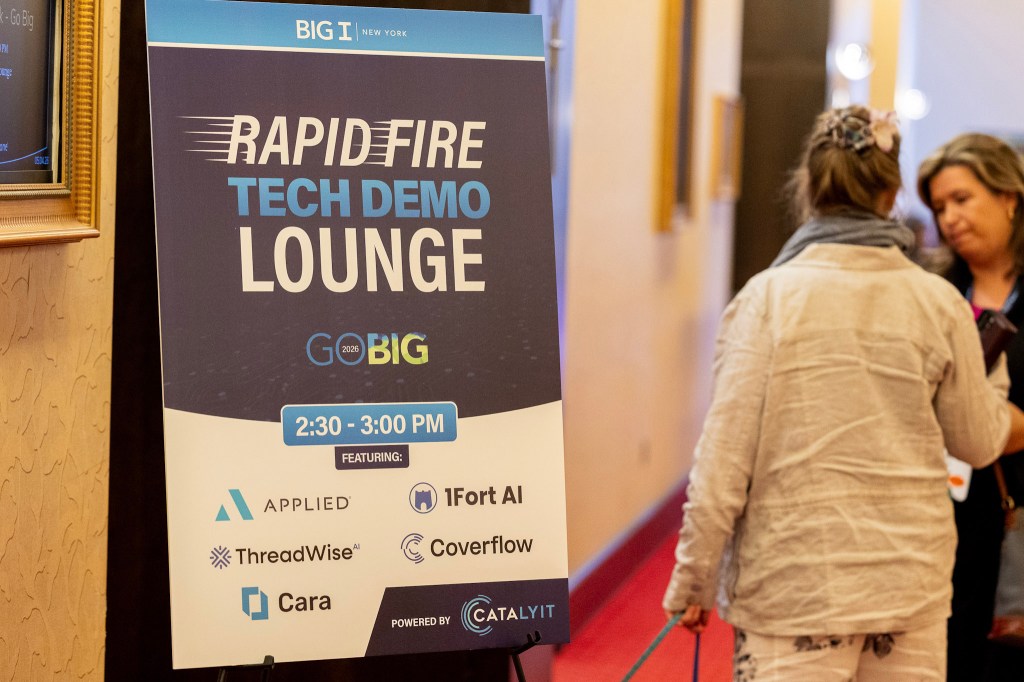
One of the biggest themes emerging from the Tech Demo Lounge at Go Big 2026 was not replacing people with AI — it was removing the repetitive work that keeps insurance professionals from doing their best work.
Across multiple demos, presenters focused on a common challenge facing agencies today: teams are overwhelmed by administrative tasks, buried in inboxes, and spending too much time on low-value work instead of client relationships, strategy, and growth.
The solution, according to several presenters, is not more software. It’s smarter workflows.
Reclaiming Time Through AI-Driven Automation
During Applied’s demonstration, presenters showed how AI-powered systems can now populate large amounts of data automatically behind the scenes, dramatically reducing manual entry work.
“Think of this in comparison to today,” the presenter explained. “How much time your team, typically servicing teams, are going in and entering in this information.”
Using examples like benefits plans and commercial lines Accord applications, the team demonstrated how AI can automatically extract and populate information that employees would otherwise spend hours entering manually.
“What you could do is reallocate that time,” the presenter said. “They could spend more time client-facing, revenue-generating activities — things that we call high-value tasks — as opposed to data entry, which is low-value repetitive.”
The technology operates in the background while users continue working elsewhere, notifying them when information is ready for review.
“Your team can pop open another tab, work on some other things, and then it notifies them when it’s ready for that review stage,” the presenter explained. “Really intuitive, really user friendly.”
Rather than functioning as a disconnected add-on platform, the AI investment was described as being “embedded within the core management system.”
AI and the Push to Reduce Errors
Beyond saving time, presenters repeatedly emphasized another critical benefit: reducing operational risk.
“If I didn’t mention any one of the other benefits other than saving time for yourself and having things be autofilled,” one speaker joked, “that is E&O errors.”
By reducing the amount of repetitive human intervention required for data handling, agencies can potentially minimize the kinds of manual mistakes that lead to exposure and compliance concerns.
The goal is not removing oversight — users still review and confirm information — but reducing the burden of repetitive processing that increases the likelihood of human error over time.
“Meet Users Where They Work”
Another major theme throughout the Tech Demo Lounge was integration.
Several presenters stressed that successful AI adoption depends on fitting naturally into existing workflows rather than forcing employees into entirely new systems.
“We are trying to talk about how we’re meeting you where your teams actually do work,” said Caleb Kramer of 1Fort.
Kramer described how insurance professionals spend much of their time mentally overloaded by inboxes, submissions, follow-ups, and remarketing tasks.
“It’s not where they do their best work,” he explained. “They do their best work when they’re in renewal meetings, when they’re in coffee shops trying to have their first meeting with prospects.”
Instead, employees often remain stuck managing growing to-do lists and fragmented communications.
1Fort demonstrated how AI can integrate directly into email workflows, helping teams organize tasks, document processes, and track submissions automatically.
“AI is great at keeping multiple plates spinning in the air at one time,” Kramer said.
AI as an Audit and Documentation Partner
One of the more practical applications discussed during the demos involved documentation and compliance support.
As tasks move through different systems, underwriters, and timelines, AI tools can help agencies maintain cleaner records and stronger visibility into account activity.
“We also want to be a good audit partner and documentation partner,” Kramer explained, “so you can show that you took those accounts to standard markets.”
Rather than relying entirely on manual tracking, AI systems can summarize workflows, document interactions, and organize information in ways that help agencies remain compliant while reducing administrative burden.
Why Email Became the Center of the Conversation
Multiple presenters focused heavily on email — and for good reason.
Email remains one of the largest sources of inefficiency in insurance workflows. Important requests get buried. Tasks pile up. Priorities become difficult to identify.
Leo, presenting later in the Tech Demo Lounge, described email as both an “untapped data source” and a major source of lost time and efficiency.
“You log in every morning and you have all these separate emails to work with,” he said. “Where do you start?”
His company’s AI platform analyzes inbox activity to help account managers prioritize urgent tasks, summarize conversations, and identify what requires immediate attention.
“One more urgent COI to drive, get a deal across the line, or a first notice of loss that desperately needs your attention,” he explained, “that’s maybe the 30th email down, and you would have found it two hours into your day.”
The system is not designed to replace decision-making, but to reduce cognitive overload and organize work more intelligently.
Healthy Skepticism Is Still Important
Interestingly, one of the strongest messages from the Tech Demo Lounge was not blind enthusiasm for AI.
It was skepticism.
“I would encourage you to be skeptical of AI,” Leo told attendees. “Of us three as vendors, and anyone else you talk to.”
That skepticism, however, was framed as productive — not fearful.
Presenters repeatedly emphasized that AI should be implemented intentionally, with human oversight, testing, and gradual adoption.
The technology works best not when it replaces people, but when it supports them.
The Bigger Picture
The most compelling takeaway from the Tech Demo Lounge was that AI in insurance is evolving beyond hype.
The focus is becoming increasingly practical:
- reducing repetitive work
- minimizing errors
- improving visibility
- organizing workflows
- helping teams prioritize effectively
- giving employees more time for relationship-driven work
As one presenter summarized, the goal is not replacing people.
“We just want to help you and your team do the 80% of the first-mile work,” Kramer said.
And for an industry built on trust, relationships, and expertise, that shift could make all the difference.
Topics