Can an Insurer Cancel a Policy Flat if the Insured Never Pays?
Question from an IIABNY member: “I have a question regarding “Cancellation for Non-Payment of Premium”. In short, after proper notice has been given and no premium is received, can an insurer opt to cancel the policy flat via issuance of a “flat cancellation endorsement”, without any agreement or response from the insured? Or does the insurer have to cancel effective after the notice is up, keep the 20-25 days of coverage in effect, and either attempt to collect the earned premium or attempt to get agreement to a flat cancellation from the insured?
I ask this because we, in agreement with the insurer we represent, would like to begin issuing “automatic renewals” via “renewal certificates”, which renew the existing policy, and are sent out 60 days prior to renewal, to minimize our issuance costs. The problem we run into is that those insureds who no longer want coverage will typically not inform us of their wish to non-renew, and will just ignore our correspondence. In these cases, we will issue a notice of cancellation for non-payment 10 days after the renewal date, and then wait the 15 days until issuing the cancellation. At this point, we would like to issue a flat cancellation in order to eliminate the time and expense of trying to collect the small earned premium or secure agreement to flat cancel with the insured. The other option would be for our insurer to just waive the earned premium, but they are unwilling to do that, as they do not want exposure on the books with no corresponding premium.”
Answer: You didn’t mention whether the policies in question are personal or commercial lines. New York Insurance Law Section 3425 governs personal lines, while Section 3426 governs commercial. Both laws have the same definition of “nonpayment of premium”:
…the failure of the named insured to discharge any obligation in connection with the payment of premiums on a policy of insurance or any installment of such premium, whether the premium is payable directly to the insurer or its agent, or indirectly under any premium finance plan or extension of credit. Payment to the insurer, or to an agent or broker authorized to receive such payment, shall be timely for the purpose of this section if made within fifteen days after the mailing to the insured of a notice of cancellation for nonpayment of premium.
The New York Financial Services Department has said in the past that a carrier cannot retroactively cancel a non-auto personal insurance policy. Interestingly, the attorney wrote:
Thus, barring a contractual or statutory provision to the contrary…, cancellation notices sent under personal lines non-automobile insurance policies are effective immediately. However, payment of the premium within the fifteen day “grace period” will reinstate the policy without any lapse in coverage… [Emphasis added]
So, if a policy is renewed on July 1st and the carrier sends a cancellation notice for non-payment on that date, cancellation is effective on July 1st. However, if the insured pays the amount due by July 16th, the carrier must reinstate with no lapse in coverage. The main point, however, is that the effective date of cancellation cannot be before the date the carrier sent the notice. In the above example, if the carrier doesn’t send the notice until July 5th, then cancellation is effective on July 5th. The same basic principle applies to most commercial lines. However, the department has also said that it’s perfectly valid for a carrier to require the initial premium payment before the renewal date, then issue a cancellation notice for non-payment to be effective on the renewal date.
While these rules apply to all personal lines, they do not apply to certain types of commercial lines policies– NYAIP, NYPIUA, Medical Malpractice Insurance Plan, Surety, Workers’ Comp, Excess Lines, Inland and Ocean Marine, and Financial Guaranty Policies.
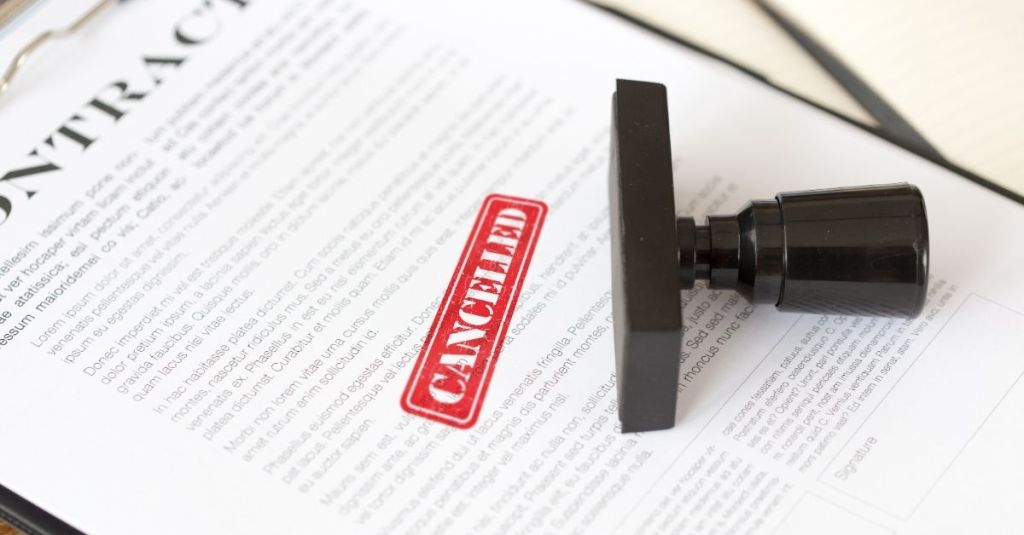
Bottom line, if you want the ability to cancel a policy flat for non-payment, you must send the notice on or before the renewal date.
Topics