Become an Additional Insured and Lose Coverage?
Can a business lose coverage if someone else’s liability insurance policy names them as an additional insured?
Yes.

What Happened
A member contacted us recently about his client, the owner of several apartment complexes. The client requires their tenants to obtain renters insurance policies and to have those policies cover them as an additional insured. This protects the landlord against losses within the tenant’s control such as incidents with dogs or rowdy guests.
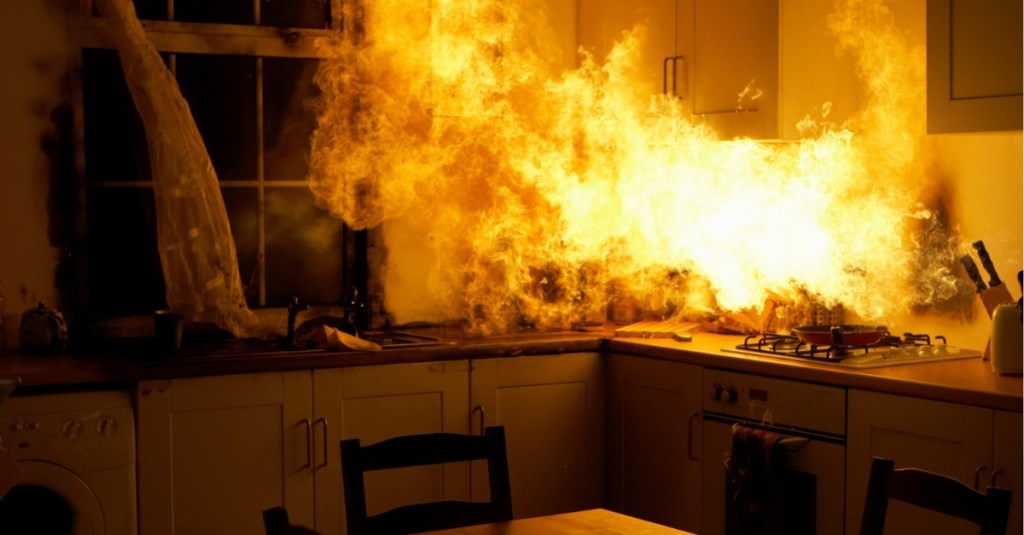
A fire occurred in one apartment unit. It wasn’t a major fire – the tenant left a frying pan unattended or something like that. The event necessitated carpet and wall cleanup from smoke and fumes. The bill came to around $40,000.
Since this appeared to be the result of the tenant’s negligence, the landlord looked to the liability coverage under the tenant’s renters policy to cover the cost. The tenant submitted the claim. The insurer denied coverage.
What Did the Policy Say?
The Endorsement
There was an endorsement on the policy with the landlord’s name on it that said:
Definitions 5. which defines “insured” is extended to include the person or organization named in the Schedule above, but only with respect to:
1. Coverage E – Personal Liability and Coverage F – Medical Payments To Others but only with respect to “bodily injury” or “property damage” arising out of the ownership, maintenance or use of the “residence premises”.
The Definition
Definitions 5., to which the endorsement referred, said:
Under both Sections I and II, when the word an immediately precedes the word “insured”, the words an “insured” together mean one or more “insureds”. [Emphasis added]
If the phrase “an insured” appears in a policy provision, it means any insured. A 2018 decision by the U.S. Court of Appeals for the Second Circuit (the circuit that includes New York and Connecticut) agreed with his interpretation.
The Coverage & the Exclusions
Now we need to look at the provisions for Coverage E – Personal Liability. These are the significant parts:
SECTION II – LIABILITY COVERAGES
A. Coverage E – Personal Liability
If a claim is made or a suit is brought against an “insured” for damages because of “bodily injury” or “property damage” caused by an “occurrence” to which this coverage applies, we will:
1. Pay up to our limit of liability for the damages for which an “insured” is legally liable. Damages include prejudgment interest awarded against an “insured”; and
2. Provide a defense at our expense by counsel of our choice, even if the suit is groundless, false or fraudulent. We may investigate and settle any claim or suit that we decide is appropriate.
SECTION II – EXCLUSIONS
F. Coverage E – Personal Liability
Coverage E does not apply to: …
2. “Property damage” to property owned by an “insured”. This includes costs or expenses incurred by an “insured” or others to repair, replace, enhance, restore or maintain such property to prevent injury to a person or damage to property of others, whether on or away from an “insured location”; [Emphasis added]
3. “Property damage” to property rented to, occupied or used by or in the care of an “insured”. This exclusion does not apply to “property damage” caused by fire, smoke or explosion; …
The Problem
Personal Liability coverage does not apply to damage to property owned by any insured. The landlord asked to be an insured under the policy and the tenant did as requested.
Oops.
If the landlord had not been named as an additional insured, exclusion F.3 would have applied. That exclusion makes an exception for damage to property rented to an insured if fire or smoke caused the damage. Because they were an insured, they lost access to that exception.
Consequently, our member’s client actually lost coverage because they had been named as an additional insured. The member asked us to review the loss and give our opinion on whether the insurer was correct. We agreed with the insurer.
If 1,000 insurance professionals were put in a room and asked whether an additional insured gets more coverage or less, at most two of them might say, “it depends.” This is one of those outcomes that no one (who doesn’t have too much time on their hands) would ever consider.
Lessons Learned
Insurance policies are contracts between the insurer and the insured. The words in the contracts bind both parties. Those words matter. The words in this policy are very clear as to what coverage does and does not apply to an insured. If you are an insured under Coverage E, that coverage does not apply when your property gets damaged.
I don’t know whether this renters’ policy was the cheapest one the tenant could find. However, this story illustrates yet again that, when a loss occurs, the words in the policy matter a whole lot more than the premium does. That’s a lesson you cannot tell your clients often enough.
Topics