A Manhole-Sized Bad Court Decision
Last year, I developed and taught a continuing education course titled Absolute Liability: New York’s Scaffold Law and the Courts. The course looked at the history and interpretation of New York Labor Law Sections 240(1) and 240(6). Collectively, these sections are known as the “scaffold law”.
For those who are not familiar, the sections require project owners, contractors and their agents to provide certain devices to workers engaged in certain activities. The devices must provide “proper protection” to the workers. Courts have held that these entities cannot delegate the legal responsibility for this duty to anyone else. An injured worker automatically wins a lawsuit against them if he can prove that a violation of either of these sections at least partially caused his injury. Since it first enacted these provisions in 1885, the New York State Legislature has prohibited defendants from raising assumption of risk (you knew what you were getting into) and comparative negligence (I was at fault but you were more at fault) as defenses in court. In 1945, the New York State Court of Appeals (the state’s highest court) ruled that defendants may not raise the worker’s contributory negligence as a defense.
Basically, if the defendant cannot prove that the only cause of a worker’s injury was his own conduct, the only remaining question is how many zeros will be printed on the award check.
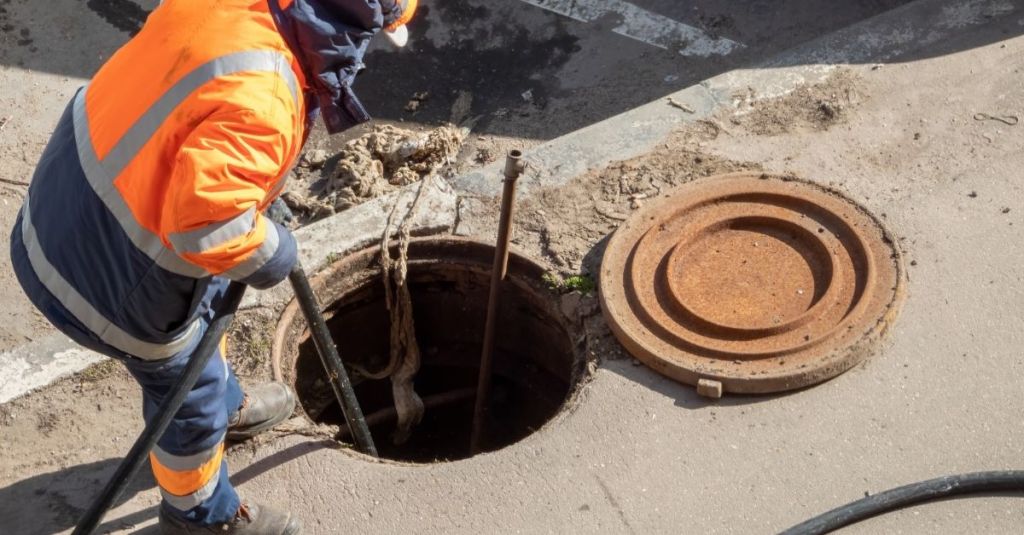
Part of my course looked at cases where the injured worker lost. One case I cited was Barreto v. Metropolitan Transit Authority. The plaintiff was an asbestos removal worker who exited a manhole on a Manhattan street at 4:00 a.m on a January morning. His foreman had instructed him, in these situations, not to start dismantling the enclosure that kept the public away until the cover was put over the manhole. He had followed these instructions several times before. This time, he started dismantling before the cover was replaced. In so doing, he stepped into the uncovered manhole and fell 10 feet. He sued multiple parties under the scaffold law to recover damages for his injuries. He lost at the trial court level, appealed to the appellate division, lost again, and appealed to the Court of Appeals.
The appellate division’s opinion was direct. “Here, plaintiff was provided with the perfect safety device, namely, the manhole cover, which was nearby and readily available…Having just emerged from it, plaintiff should have known that the manhole was still open, and covering it at that time would have avoided the accident…Plaintiff’s claim that the statute required defendants to furnish a guardrail around the manhole, or safety netting or a harness, is not applicable here where the manhole cover was the adequate device for protecting the workers. There is no reason that other devices were necessary after the workers exited the manhole or that the manhole cover was inadequate.”
In class, I read these sentences aloud for comic effect, to show that judges sometimes get sarcastic. Yesterday, the plaintiff got the last laugh. A divided Court of Appeals ruled in his favor.
Associate Judge Eugene F. Pigott, Jr. wrote for the majority. He noted that the project’s site safety consultant testified that there should have been a guard rail system around three sides of the open manhole during the enclosure’s dismantling. This, in the judge’s opinion, was proof that the defendants did not provide the plaintiff with an adequate safety device. He also said that the plaintiff could not have been the sole proximate cause of his injury. The manhole cover was so heavy that it took two men to lift it into place. The judge reasoned that one person cannot be responsible for his own injury if he needed help to prevent it. For these reasons, Judge Pigott, Chief Judge Jonathan Lippman, and Associate Judges Jenny Rivera and Eugene M. Fahey ruled in favor of the injured worker.
Associate Judge Leslie E. Stein, joined by Associate Judge Sheila Abdus-Salaam, disagreed in part. In her opinion, the court should not have ruled in favor of either side. Rather, because some facts were in dispute, she wrote that a jury should decide whether Mr. Barreto received proper protection. The open questions, as she saw them, were:
- Did the absence of the site safety consultant at the scene, and his failure to ensure that the work crew immediately replaced the manhole cover, contribute to the accident?
- Was the site safety consultant’s testimony about the need for a guard rail system credible?
- Was the manhole cover an adequate safety device?
- Were there lights shining on the site? There was conflicting testimony about this. Remember, this work was done overnight in January, so there was no sunlight.
In her view, these were questions for a jury to consider and answer.
Associate Judge Susan Phillips Read was having none of it. Her dissenting opinion cited the plaintiff’s own testimony as evidence that he knew that he was supposed to wait until the hole was covered before he began dismantling the enclosure. He offered no explanation for his safety lapse, further incriminating him in her eyes.
She also doubted the credibility of the safety consultant’s testimony. His opinion that a guard rail system should have been in place did not cite any federal or state safety regulations. Also, she wrote that requiring a guard rail system made no sense. Per the foreman’s instructions, the manhole cover was supposed to be in place before dismantling of the enclosure began. She also rejected the argument about the weight of the manhole cover. “(T)his is not a case where a supervisor instructed an employee to use safety equipment that was unavailable or somehow unusable for its intended purpose. Plaintiff was never told to replace the manhole cover by himself, and whether it took two or more of the (asbestos removal) workers in the five-person crew to replace the manhole cover is irrelevant.”
“(P)laintiff’s foreman instructed him not to begin dismantling the enclosure until the manhole cover had been replaced,” Judge Read continued, “and plaintiff disregarded this basic safety direction, which was the sole proximate cause of his accident: obviously, he would not have fallen into the underground chamber through the manhole opening if he had waited for the manhole to be covered, as he conceded he knew he was supposed to do, and had done on previous occasions. … It is certainly poor public policy to treat employers that direct their workers how to accomplish a task safely and make adequate safety equipment available just the same as employers that make little or no effort in this regard.”
Lastly, she addressed the dispute over whether the lights were on. “(T)his disputed fact is beside the point. Dim or nonexistent lighting would, of course, lend greater credence to plaintiff’s testimony that he did not notice whether any of his co-workers had replaced the manhole cover or that it was missing, even though the crew was a small one working together in close quarters. It does not, however, explain why plaintiff proceeded to disassemble the enclosure without receiving the ‘okay’ from his supervisor, which he testified that he had waited for in the past.”
The upshot is that the court voted 4-3 to award summary judgment to Mr. Barreto (“summary judgment” is a judgment based on the judge’s conclusion that the litigation involves only a question of law, with no associated questions of fact).
As one who spent a lot of time last year learning about and speaking about the scaffold law, here are my thoughts on the matter.
- I suspect some readers will immediately react with grumbling about so-called “liberal judges”. I want to nip that in the bud. Judge Pigott is a Vietnam veteran, former Erie County Attorney, and a jurist with 18 years of experience. His appointments to all three levels of the New York State court system were courtesy of Republican Gov. George Pataki. Chief Judge Lippman was nominated for various court positions by Gov. Pataki and Democratic Gov. David Paterson. Judge Fahey, who received nominations from Governors Pataki and Andrew Cuomo, was house counsel for Kemper Insurance Co. for eight years in the 1980s and 90s. Not exactly a radical bunch.
- I am not an attorney. I’m merely someone with a deep interest in court decisions and the impacts they have on people’s lives. I have a CPCU designation of which I am very proud, but let no one mistake that for the expertise of a practicing lawyer.
- I hate this ruling. I’m sorry Mr. Barreto got hurt. The court opinions didn’t describe his injuries, but cases involving sprained ankles don’t go to the Court of Appeals. His injuries must have been severe. Regardless, the fault for his accident lies with his crew members and him. The manhole cover was right there. Manhole covers keep millions of pedestrians from falling into holes every day. That’s a pretty good track record of accident prevention. Further, he knew the cover was supposed to go on before dismantling work began. He wasn’t new to the job; he had seen the cover go on first many times before. It was standard procedure. This time, someone forgot and he paid the price for it. No one should celebrate that outcome. However, it doesn’t necessarily follow that third parties should be held responsible.
While researching the Absolute Liability course, I read about many injured workers who did what they were supposed to and still got hurt. Isidore Koenig was ordered to climb a ladder he thought was unsafe. Richard Hoffman wore a harness and used the scissor lift his employer gave him, and still fell 35 feet to a lobby floor. Paul Wicks attached his ladder to a pole in the middle of an island at a gas station so he wouldn’t fall over; he fell anyway when the pole collapsed. Sharif Mohamed suffered horrible injuries when a backhoe bucket crushed him in an excavated trench after a co-worker bumped the backhoe’s controls. Sean Dowdell lost a leg because no one secured a piece of plywood that he stepped on while guiding a crane operator from 20 feet above ground.
The legislature enacted the scaffold law to protect people like this. In my opinion, using it to compensate someone who was obviously careless is bad public policy. It rewards carelessness, punishes those who could not prevent the carelessness, sticks taxpayers with the bill (three of the four defendants in the Barreto case were public entities), causes liability insurance rates for contractors to rise, and further hurts the state’s business climate. Mr. Barreto will get some compensation to help him cope with the consequences of his accident. I certainly wish him well, but I disagree with the conclusion that the law compels the City of New York, the Metropolitan Transportation Authority, and the New York City Transit Authority to pay him that compensation. In my mind, it’s not justice.
This decision will go down as an unfortunate precedent in the unfolding history of the scaffold law. Plaintiffs’ attorneys will cite it in their arguments in future cases, and judges will have to consider it. I only hope that, when they do so, they will also consider the points Judge Read raised in her dissent.
I also hope that contractors will be extra vigilant when they spot their workers who don’t follow instructions. This attention may prevent more serious injuries, more crippled workers, and more large legal settlements. That would be the best outcome of all.
Topics