Non-Renewal Notice on Homeowners Policy From Carrier Due to Exposure to Catastrophic Losses
Question: “A referral to me received the attached non-renewal notice from her current Homeowners carrier. It gave the reason for non-renewal as:
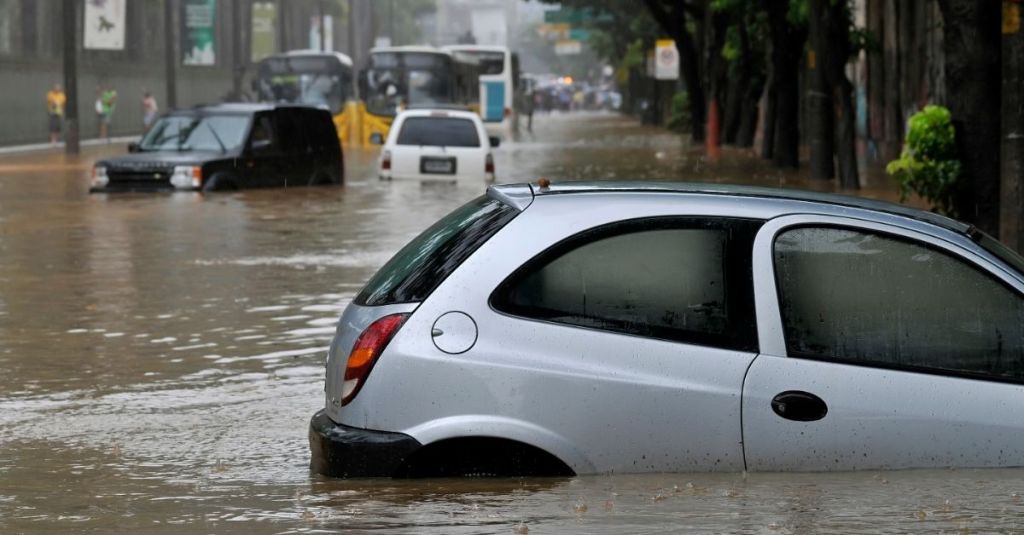
“As part of our efforts to manage risk and exposure in your state, the determination was made that this property exceeds our desired risk threshold. Potential exposure of the insured property to natural losses, including catastrophic losses, as well as other underwriting factors, was considered in making this determination.”
Her agent says he has a bunch from this carrier like this. Is this a legal reason to non-renew in New York? I’ve never seen anything like it.”
Answer: Yes, this appears to be a valid non-renewal notice. Every third anniversary, an insurer may non-renew a non-auto personal lines policy for virtually any reason that does not violate some other law (e.g., civil rights laws). There are very few legal restrictions on the reasons for which an insurer may non-renew a policy. Exposure of the property to natural catastrophic weather events is certainly a valid underwriting reason. It appears to me that the insurer is acting within its rights. In addition, they sent the notice within the time frame required by New York Insurance Law Section 3425, subsection (d) – 45 to 60 days before expiration.
More information is available on the Cancellations, Nonrenewals & Conditional Renewals page in the Answer Center of our website.
New York INSURANCE LAW — CHAPTER 28 OF THE CONSOLIDATED LAWS
Article 34 — INSURANCE CONTRACTS – PROPERTY/CASUALTY
Ins. Law s 3425 Certain property/casualty insurance policies; cancellation and renewal provisions; agents’ contracts and brokers’ accounts
(a) This section shall apply to covered policies of insurance as defined in paragraphs one, two and three hereof.
(1) “Covered policy” means a contract of insurance, referred to in this section as “automobile insurance”, issued or issued for delivery in this state, on a risk located or resident in this state, insuring against losses or liabilities arising out of the ownership, operation, or use of a motor vehicle, predominantly used for non-business purposes, when a natural person is the named insured under the policy of automobile insurance; provided, however, that the use or operation of the motor vehicle by a transportation network company driver as a TNC vehicle in accordance with article forty-four-B of the vehicle and traffic law or the use or operation of the motor vehicle through a peer-to-peer car sharing program in accordance with article forty of the general business law, shall not be included in determining whether the motor vehicle is being used predominantly for non-business purposes.
(2) “Covered policy” also means a contract of insurance, referred to in this section as “personal lines insurance”, other than a contract of insurance defined in paragraph one hereof, issued or issued for delivery in this state, on a risk located or resident in this state, insuring any of the following contingencies.
(A) loss of or damage to real property used predominantly for residential purposes and which consists of not more than four dwelling units, other than hotels and motels;
(B) loss of or damage to personal property in which natural persons have an insurable interest, except personal property used in the conduct of a business; and
(C) other liabilities for loss of, damage to, or injury to persons or property, not arising from the conduct of a business, when a natural person is the named insured under the policy.
(3) A personal umbrella liability policy shall be considered a “covered policy” under paragraph two, and not paragraph one, of this subsection. …
(6) “Renewal” or to “renew” means the issuance and delivery by an insurer, at the end of the policy period, of a policy superseding a policy previously issued and delivered by the same insurer …
(7) With respect to personal lines insurance, “required policy period” means a period of three years from the date as of which a covered policy is first issued or is voluntarily renewed.
(d)(1) Unless the insurer, at least forty-five but not more than sixty days in advance of the end of the policy period, mails or delivers to the named insured, at the address shown in the policy, a written notice of its intention not to renew a covered policy, or to condition its renewal upon change of limits or elimination of any coverages, the named insured shall be entitled to renew the policy upon timely payment of the premium billed to the insured for the renewal. The specific reason or reasons for nonrenewal or conditioned renewal shall be stated in or shall accompany the notice. This paragraph shall not apply when the named insured, an agent or broker authorized by the named insured, or an insurer of the named insured, has mailed or delivered written notice to the insurer that the policy has been replaced or is no longer desired. …
(e) With respect to personal lines insurance policies, no notice of nonrenewal or conditional renewal of a covered policy shall be issued to become effective during the required policy period unless it is based upon a ground for which the policy could have been cancelled.
Topics